Elon Musk being named the first trillionaire has been a major discussion point in global news this year. However, historical figures like Augustus Caesar and Mansa Musa suggest he may not be the first person to ever achieve this degree of wealth. This article will discuss the challenge of measuring historical wealth and the implications of Musk’s ascendancy. If the history of wealth and power interests you, our Follow the Money tour explores exactly similar themes on the streets of Oxford.
On the 12th of June 2026, Forbes announced that Elon Musk had officially become the world’s first trillionaire [1]. It was a seismic shake-up for the world, as the trillion-dollar mark had seemed impossible only 11 years ago, when the world’s richest person (Bill Gates) was worth a ‘measly’ $79 billion USD [2]. All metrics considered, then, it’s valid to say that Musk is an incredibly powerful man. Not only through the wealth he controls, but also because of how he deploys his wealth. He leverages a loud presence on social media, through his purchase and ownership of X (formerly Twitter), and he also enjoyed brief political power through his support of Donald Trump, when he briefly led the Department of Government Efficiency (DOGE) in 2025.
Despite all this power, however, his wealth is highly unstable. The amount Elon Musk needed to reach the trillion-dollar mark came from the unconventional release of the SpaceX IPO. As soon as the company became public, the stock value shot up, which in turn led to Musk’s stake in the company increasing his personal value to above a trillion. His personal value will fluctuate with the stock, and already has. SpaceX stock, initially valued at $135.00, peaked to $211.39 a short while after release, before falling to $108.37 a few months later [3]. This means that Musk’s net worth similarly fluctuated, though on much greater scales.
This volatility points to two key things which should be kept in mind when discussing what ‘ultra-wealth’ really is. The first, is that it is tied directly to the ownership of assets, more than the holding of cash. The ultra-wealthy become so through the things they hold of value outside of cash in the bank: land and real estate, stocks and investments, and other assets that increase in value, often exponentially with little need of labour or input. The second thing to note is that value is relative, and the ultra-wealthy are best understood in their context.
One question that has popped up since Musk ‘broke’ the trillion dollar mark is whether he really is the first ‘trillionaire’ the world has known. The idea that a ‘trillionaire’ is a new record of wealth is grounded in how value has changed over time. Inflation means that the value of money differs over time. While a trillion is an absurd amount in value when compared with the average worth of most people in the world, is it actually more than one individual has ever held historically, relative to others in their own context?
Measuring WEALTH Over time
The value of a United States dollar today is worth far less than the value of a United States dollar in the times when oil tycoon John Rockefeller or steel magnate Andrew Carnegie amassed their fortune. Does that make them ‘trillionaires’ too?
Likely not, though they are both considered to be some of the wealthiest men of all time. One of the easy ways of measuring historic wealth is to compare it to national GDP to determine relative size. For example, currently, there are twenty-one countries with a national wealth of over 1 trillion [4]. Switzerland and Poland both have around a $1 trillion GDP, so Musk’s personal wealth could be compared directly to the entire worth of the GDP of those countries. The GDP of the US is sitting at 30.7 trillion USD, so Musk’s worth would be roughly equivalent to 3.25% of the US GDP. This method can assist with determining the relative value of historical ultra-wealthy individuals when we have a measurement of historical GDP amounts as well [5]. In 2015, Jacob Davidson, a writer for Money Magazine, took on the task of investigating historical wealth and ranking the world’s wealthiest people in history [6]. He estimated Rockefeller’s personal worth to have been about 2% of the entire US economic output for 1918, while Carnegie’s worth amounted to 2.1% of the US GDP in 1901. Musk would therefore comparatively come out at the top of this list.
However, what about those who held immense wealth during eras from which we don’t have easy data for calculating and measuring either GDP or even monetary value?
The Richest People In History
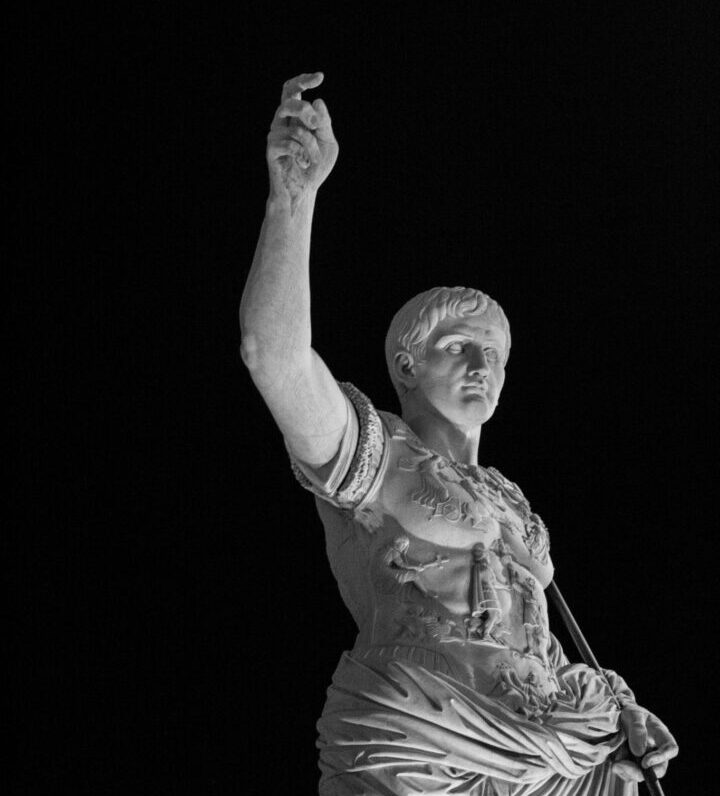
Image Credit: Daniel Damasio. Source: UnSplash.
The two historical figures that are generally most discussed in this conversation are Augustus Caesar and Mansa Musa. While there are numerous other examples of ultra-wealthy historical figures, the wealth that these two men possessed is particularly staggering compared to those in their time, therefore providing a good contrast to the Musks and Bezoses of today.
Augustus Caesar is commonly thought to be one of the wealthiest men in history. Like many of the ultra-wealthy in history, he inherited his wealth and position, then used it to expand his power. He prioritized imperial conquest and gained vast wealth through his ownership of land and resources gained this way. He famously eventually held personal ownership of Egypt, and used his power to extract exorbitant wealth from his subjects. Estimates place his wealth at 25-30% of the global GDP at the time [6]. By conversion to modern estimates, his net worth sat around $6.4 trillion, far above Musk [7]. What did he do with all this wealth? He used it to maintain his power, and further enrich himself. Caesar was a proponent of the so-called ‘bread and circus’ policy, where he and his associates spent money to sway the loyalty of the people so that he could comfortably advance his career [8]. He sponsored numerous gladiatorial games, invested in the construction of new temples, a theater, a new forum and more. In these ways, he was able to gain support from the masses [8].
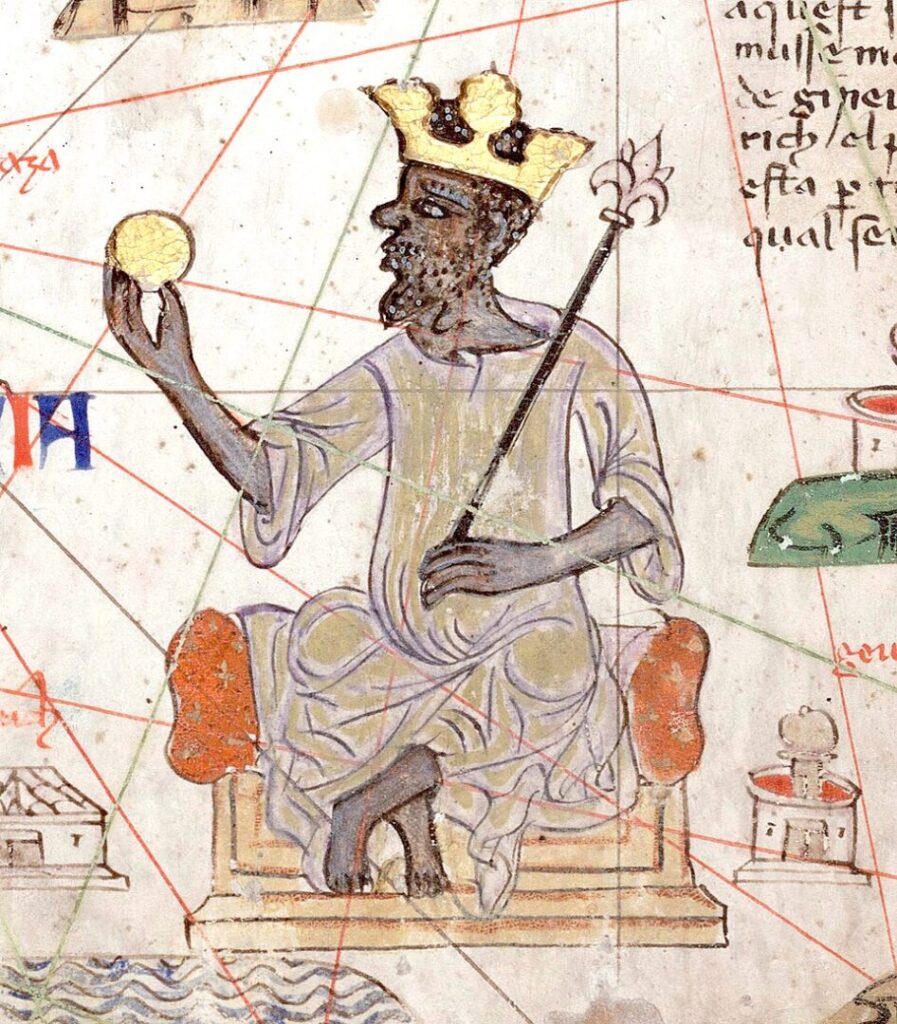
Mansa Musa is perhaps one of, if not the most famous example of historical wealth. He was the historical ruler of Mali in the 14th century and controlled vast resource deposits of precious items, especially gold and salt [9]. His net worth was vast and the absence of sources mean that we simply lack the ability to measure the extent of his immense wealth.
Jacob Davidson places him as the historical winner due to the fact that his wealth was insurmountable and ‘immeasurable’. He turned Timbuktu into a centre of knowledge and academic thought [Ibid]. Musa’s wealth was enough to uplift economies, like he did for Cairo during his visit, and it was enough to establish Mali as a geo-political powerhouse.
Wealth in Context
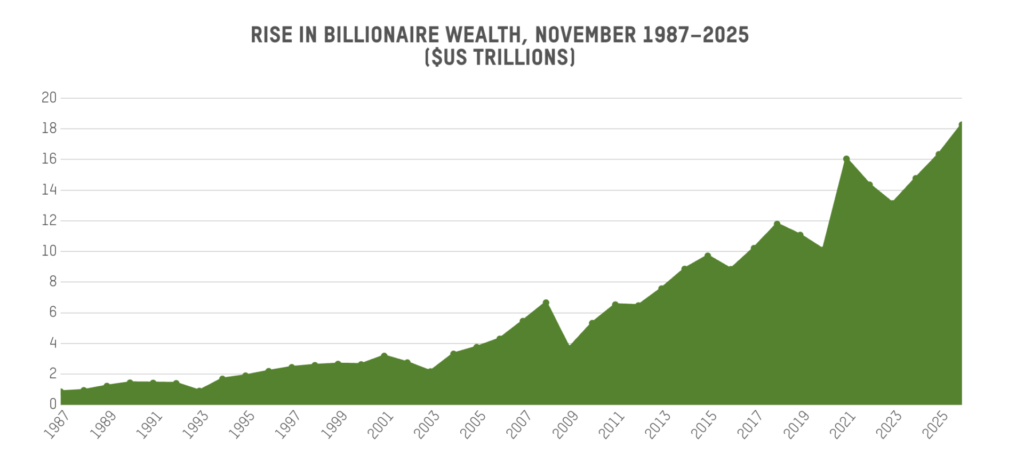
In many ways, comparing wealth across time is rather unhelpful. The ultra-wealthy are ultra-wealthy, no matter the era. What is more helpful is to ask what it means for the world when people reach such levels of ultra-wealth. Caesar gained his wealth through imperial conquest, a trend that would be echoed by Europeans in the Early Modern era. However, since the Industrial Revolution, hyper-wealth has increasingly become concentrated in the hands of those who control industry, and now technology. Musk represents a newer trend in capital distribution, where ultra-wealth is extracted through private enterprise and exponentially increasing.
Scholars agree that ancient leaders like Musa and Caesar were much more proficient at extracting wealth from their societies than the elites of today [5]. Davidson’s research found that “pre-modern societies were able to extract nearly 76% of the maximum amount of wealth that could be taken before their people would slip below subsistence levels” [5]. The steady growth of the ultra-wealthy today signals a return to similarly efficient methods of extraction. Perhaps the most potent signal of this is the enriching tenure of a billionaire president over the world’s largest economy.
Oxfam‘s recent research into the billionaire class has found that on average, the wealth of the ten wealthiest men grows by $100 million everyday [11]. This sort of continuous wealth concentration will ensure the further concentration of global wealth in the hands of those that already have it. It’s a cascade: as the rich get richer, it’ll be easier for them to take more and more resources. According to Oxfam, every hour, $30 million is extracted from the Global South and sent to the richest 1% in the Global North. This relentless siphon of extraction is currently unchecked, creating a compounding cycle allowing for the continuing concentration of wealth in the hands of the very few.
By Grigorii Shavrin
References
[1] Forbes Press Releases, “Forbes Declares Elon Musk as the World’s First Trillionaire,” Forbes (12 June, 2026), https://www.forbes.com/sites/pr/2026/06/12/forbes-declares-elon-musk-as-the-worlds-first-trillionaire/.
[2] BBC, “Bill Gates is named world’s richest person again,” BBC News (02 March, 2015), https://www.bbc.com/news/business-31694951.
[3] Yahoo Finance, “Space Exploration Technologies Corp (SPCX),” Yahoo Finance (10 August, 2026), https://finance.yahoo.com/quote/SPCX/.
[4] World Bank Group, “GDP (current US$),” accessed 10 August 2026, https://data.worldbank.org/indicator/NY.GDP.MKTP.CD?end=2025&most_recent_value_desc=true&start=1960.
[5] Jacob Davidson, “How to Compare Fortunes Across History,” Money Magazine (29 July, 2015), https://money.com/richest-people-of-all-time-methodology/.
[6] Jacob Davidson, “The 10 Richest People of All Time,” Money Magazine (30 July, 2015), https://money.com/the-10-richest-people-of-all-time-2/.
[7] In 2015, Davidson calculated Caesar’s wealth at $4.6 trillion. To adjust this to 2026 figures, the US Bureau of Labor Statistics calculator (https://www.bls.gov/data/inflation_calculator.htm) was used. The value of $4,600,000.00 was input and rounded.
[8] Luca Grillo, How to Make Money : An Ancient Guide to Wealth Management, 1st ed. (Princeton: Princeton University Press, 2024), pp. 41-43.
[9] South African History Online, “Summary: The Kingdom of Mali and the City of Timbuktu in the 14th Century, ” South African History Online (12 July, 2016), https://sahistory.org.za/ref/A-0121379.
[10] OxFam,”Extreme Inequality and Poverty,” (18 January, 2026), https://www.oxfamamerica.org/explore/issues/economic-justice/extreme-inequality-and-poverty/.
[11] Oxfam Press Releases. “Billionaire wealth surges by $2 trillion in 2024, three times faster than the year before, while the number of people living in poverty has barely changed since 1990.” Oxfam (20 January 2025), https://www.oxfam.org/en/press-releases/billionaire-wealth-surges-2-trillion-2024-three-times-faster-year-while-number.